Gaumont-Kalee / BAF Type 493
Manufacturer:
Gaumont-Kalee / BAFModel:
Type 493Country of Manufacture:
United KingdomMicrophone Type:
CondenserPolar Pattern:
Multi-PatternProduction Start Year:
1950Rarity:
5
Audio Recording:
Speech (male) recorded with the BAF 493 condenser microphone.
Multiple quality options available
Microphone History:
British Acoustic Films Ltd (B.A.F), a maker of cinema, sound, and film equipment, was acquired by Gaumont British and later underwent several reorganisations and ownership changes.
Although this example is stamped with BAF as the maker's mark, it appears in a Gaumont-Kalee catalogue alongside their model 492 ribbon microphone.
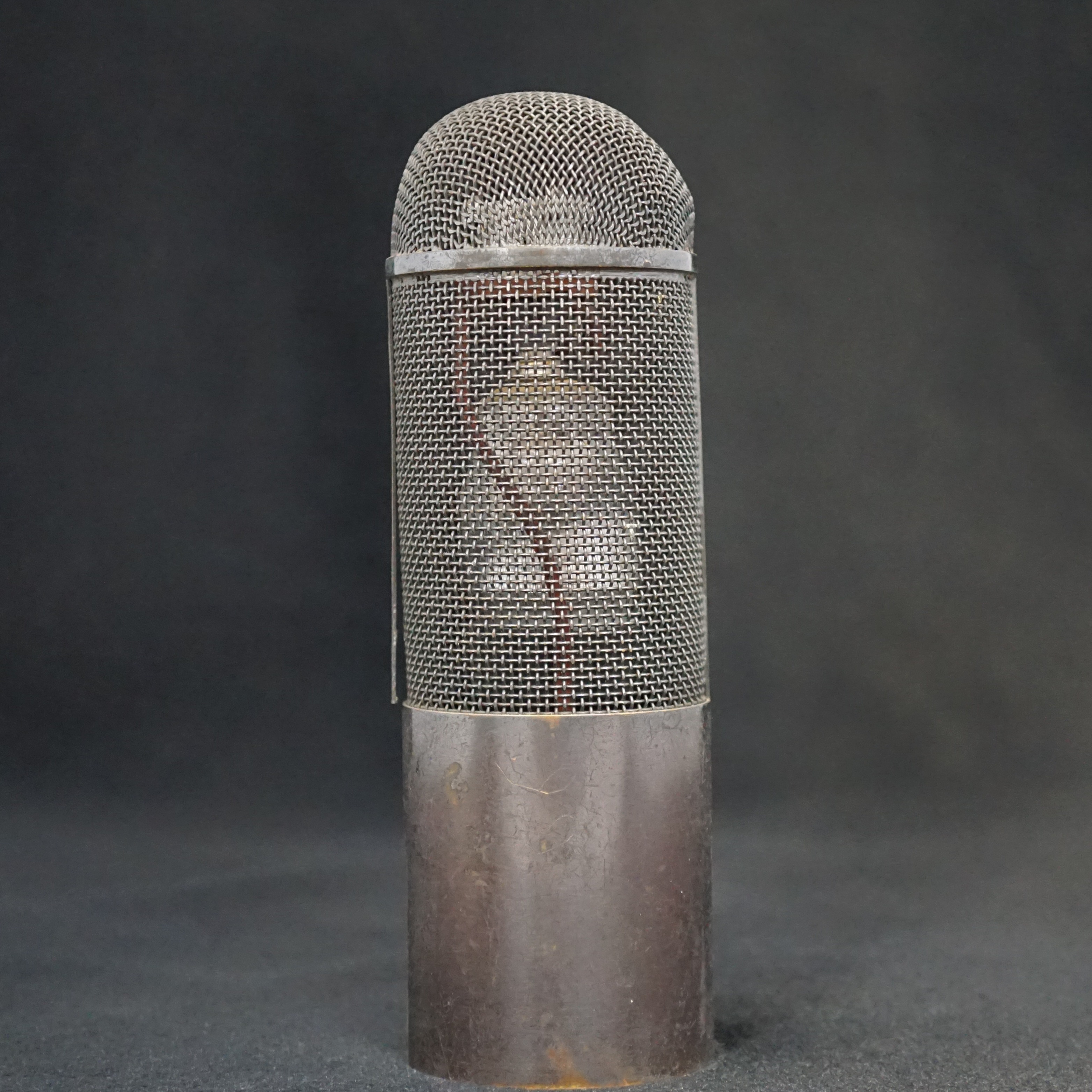
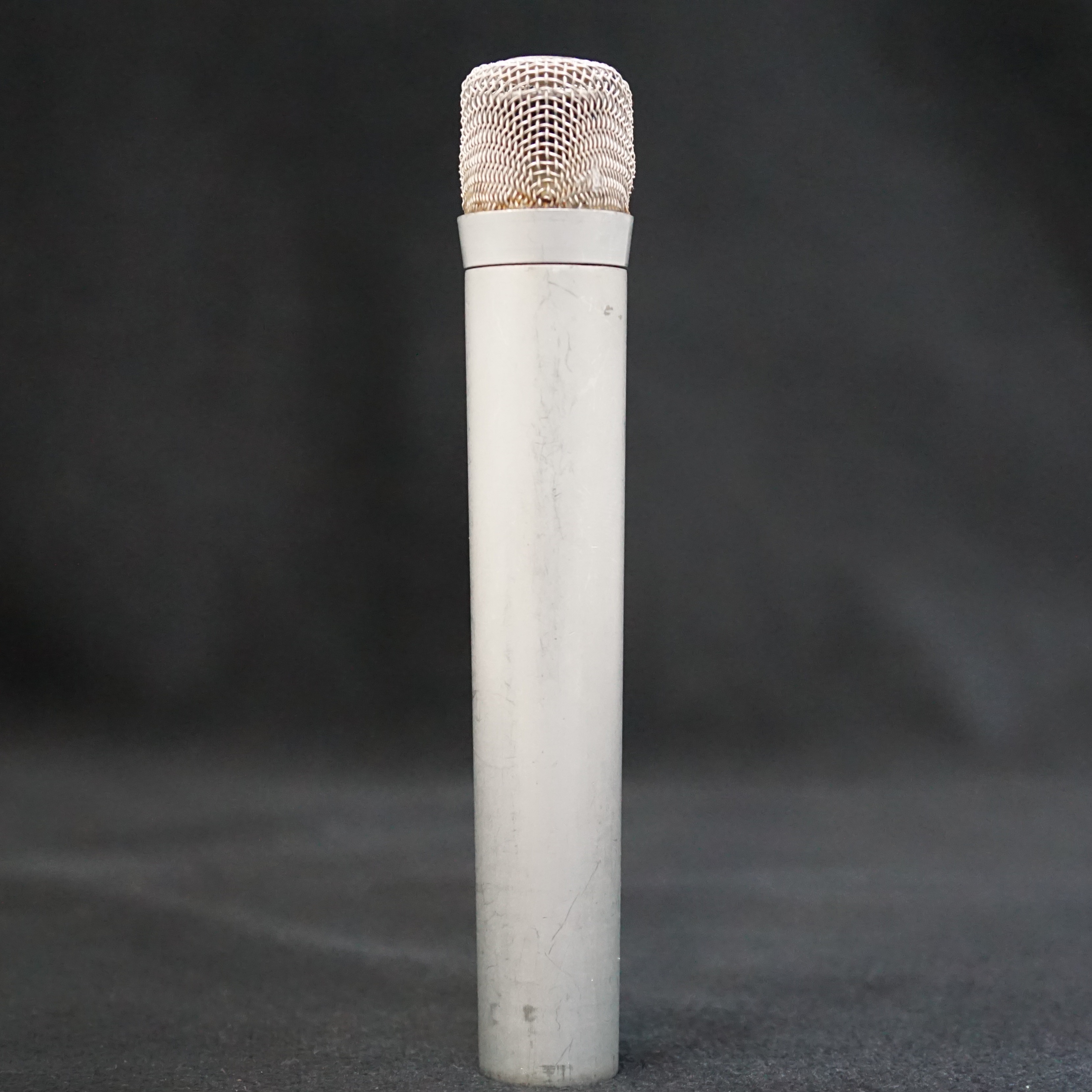
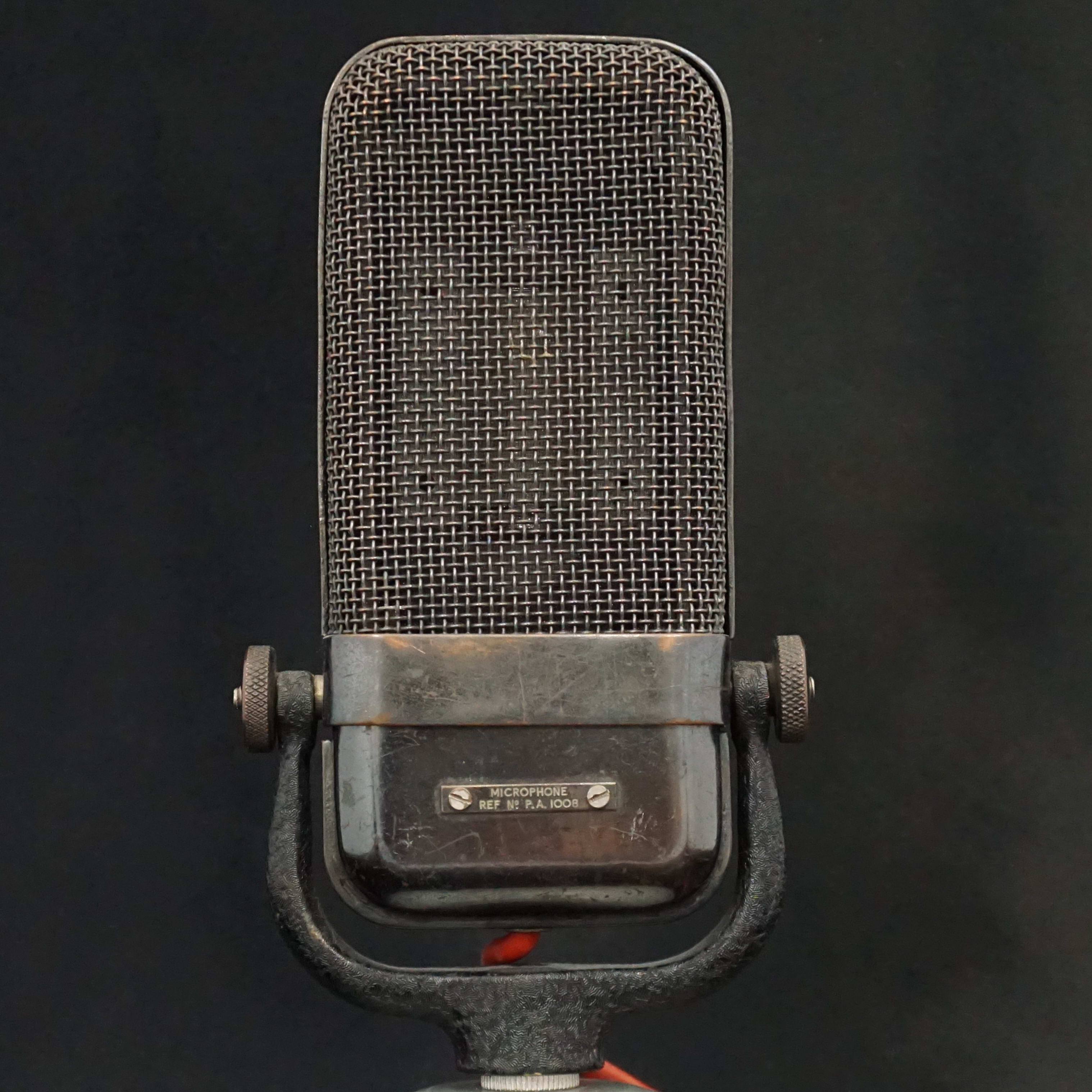
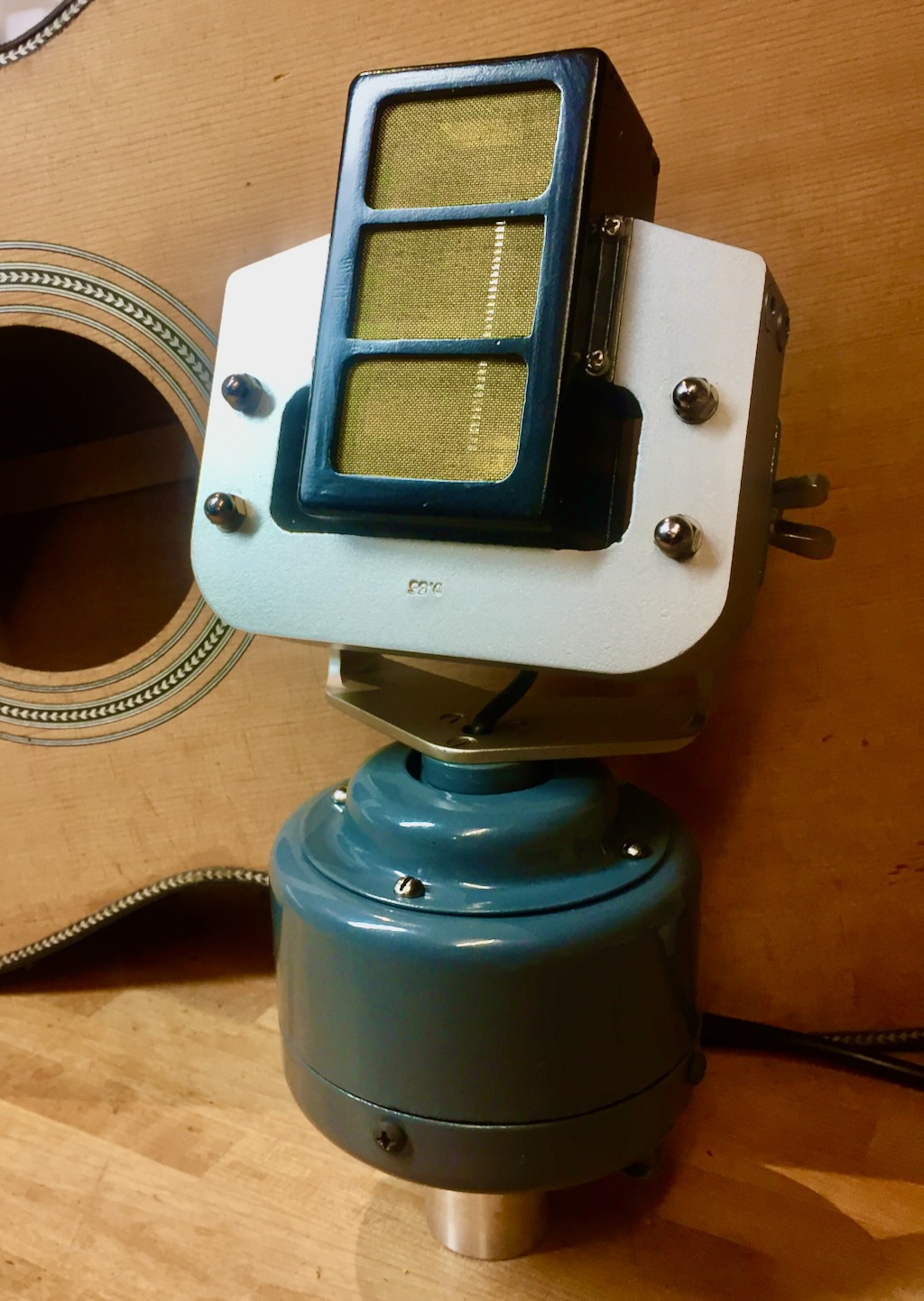
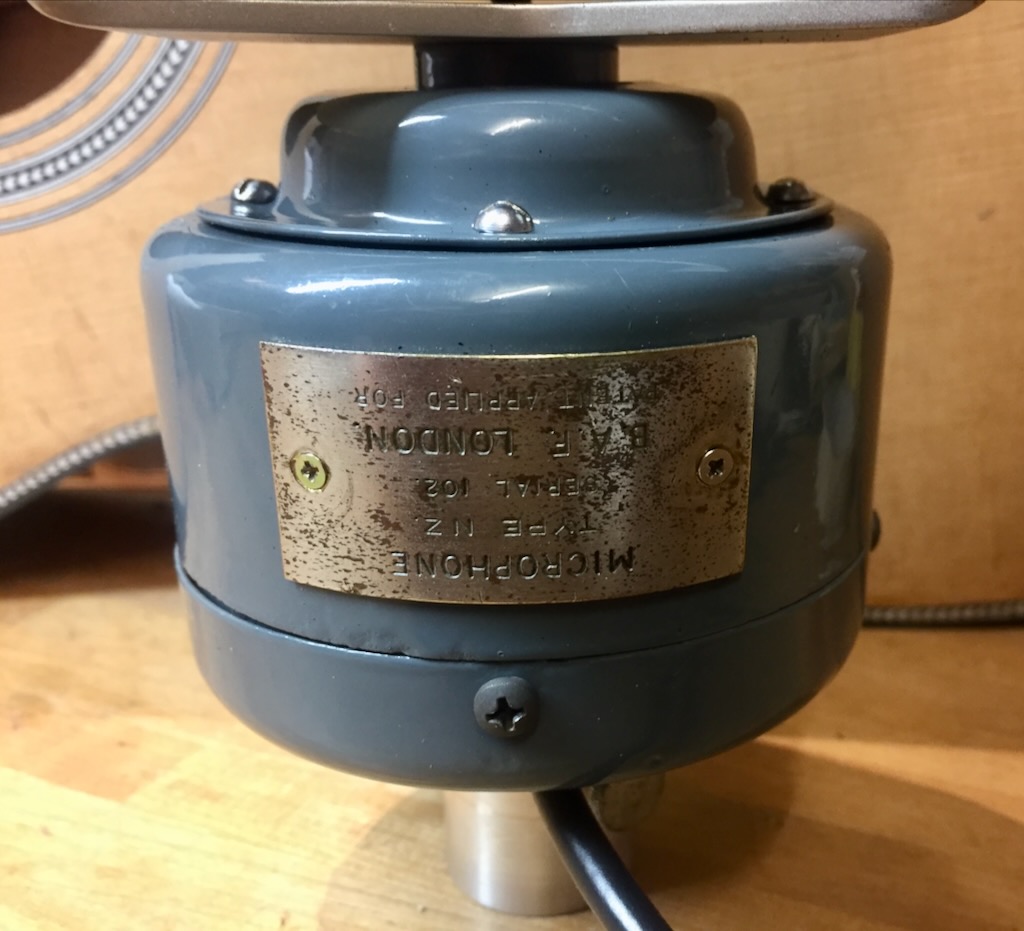
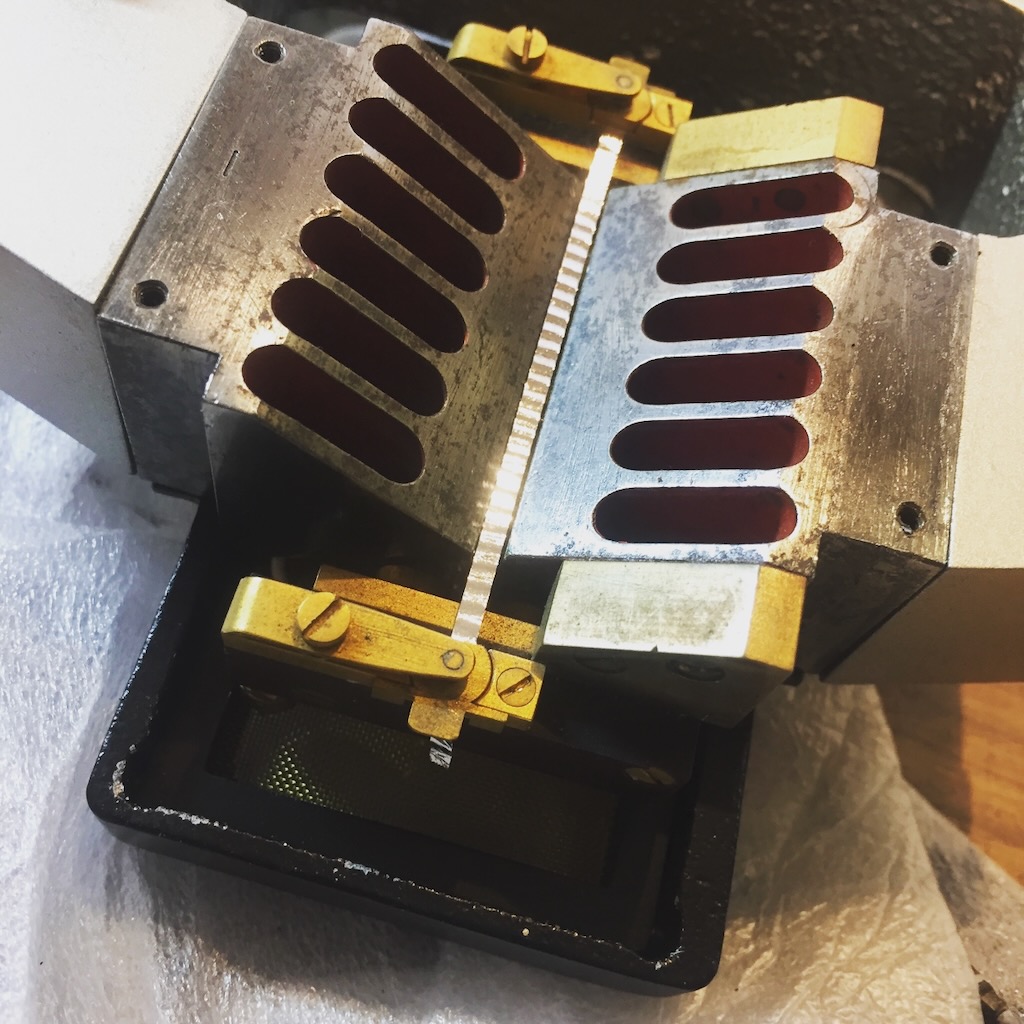
BAF made another huge ribbon microphone called the type NZ. (Photographs 1, 2, 3 )
Technical Description:
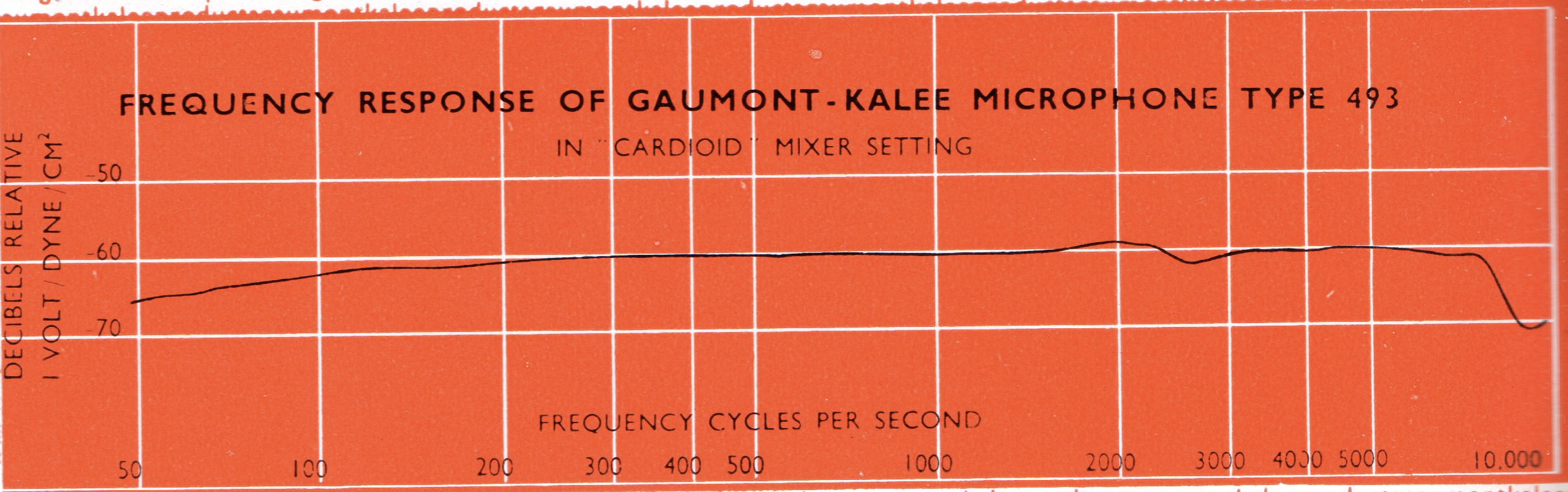
From the 1951 Gaumont Kalee catalogue, page 121
Frequency response substantially flat ±3dB from 50 to 10,000 Hz.
MoMics analysis:
This microphone is unique in that it contains two condenser capsules arranged side by side, each powered by valve circuitry. The output is via a six pin Cannon style socket with a screw thread, branded 'E&F' on our example. The amplifier is based around an EF37 tube. Both the capsule mount and the tube itself are suspension mounted with rubber bands and blocks, all of which had perished with age.
Without the power supply, it is quite hard to tell whether the circuit would originally have been a plate follower or a cathode follower type, but either way the signal from the microphone is unbalanced and the output transformer and some of the circuit would have been housed in the power supply. For our tests we wired it up as a plate follower, although the alternative would perhaps be lower impedance and less prone to interference.
A curious feature of this microphone is that the two capsules are not identical. One appears to be omnidirectional, with a single small vent from the rear of the back plate. The second has eight holes and is likely to be cardioid or perhaps even figure-8 pattern, with a black plastic disc to the rear. Although the capsules both feed into a single amplification stage, each has its own polarisation voltage wire from the plug, allowing the two patterns to be activated remotely from the power supply, or perhaps even blended together.
Below is the circuit traced out from the microphone.
Frequency Response: