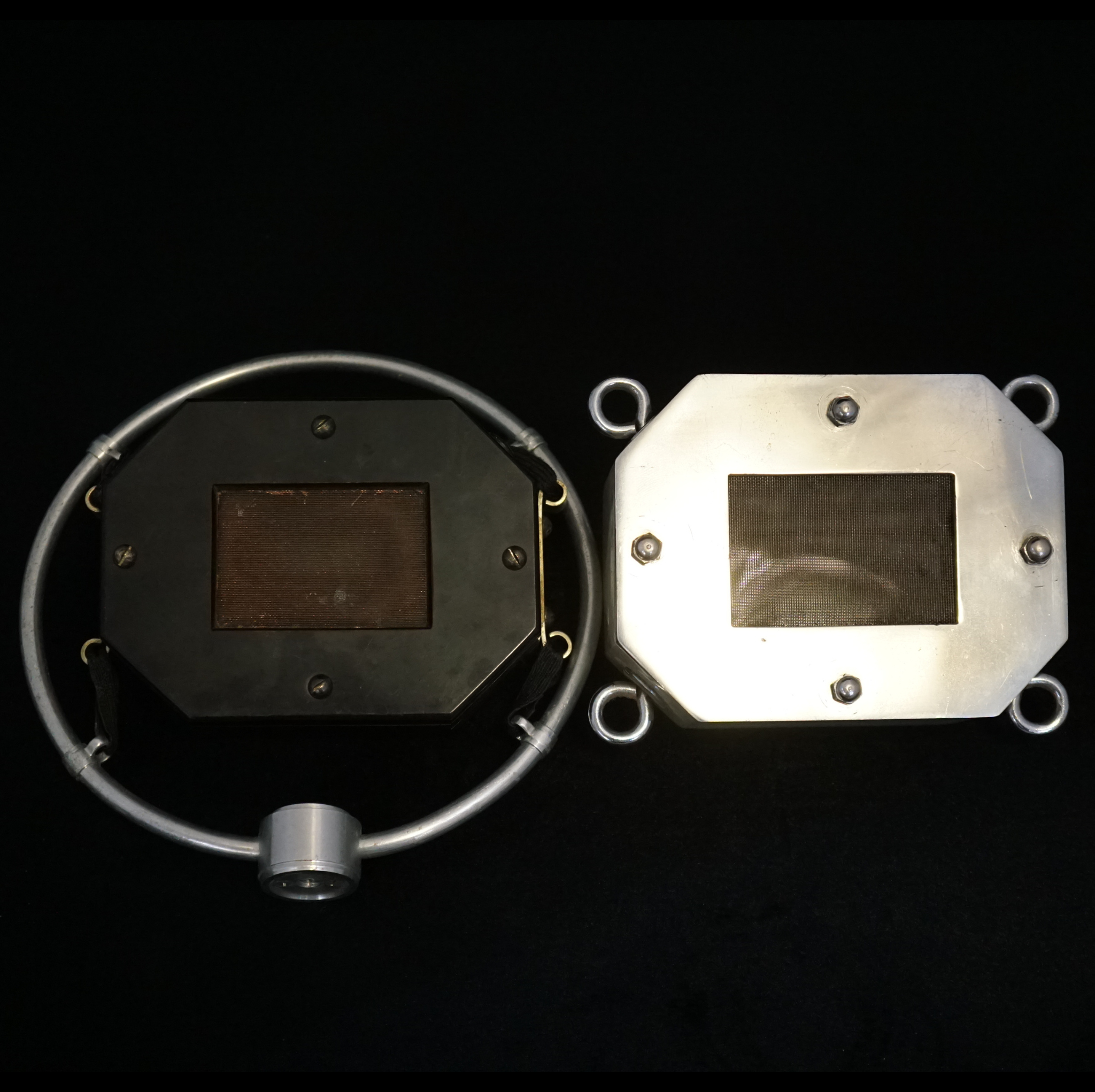
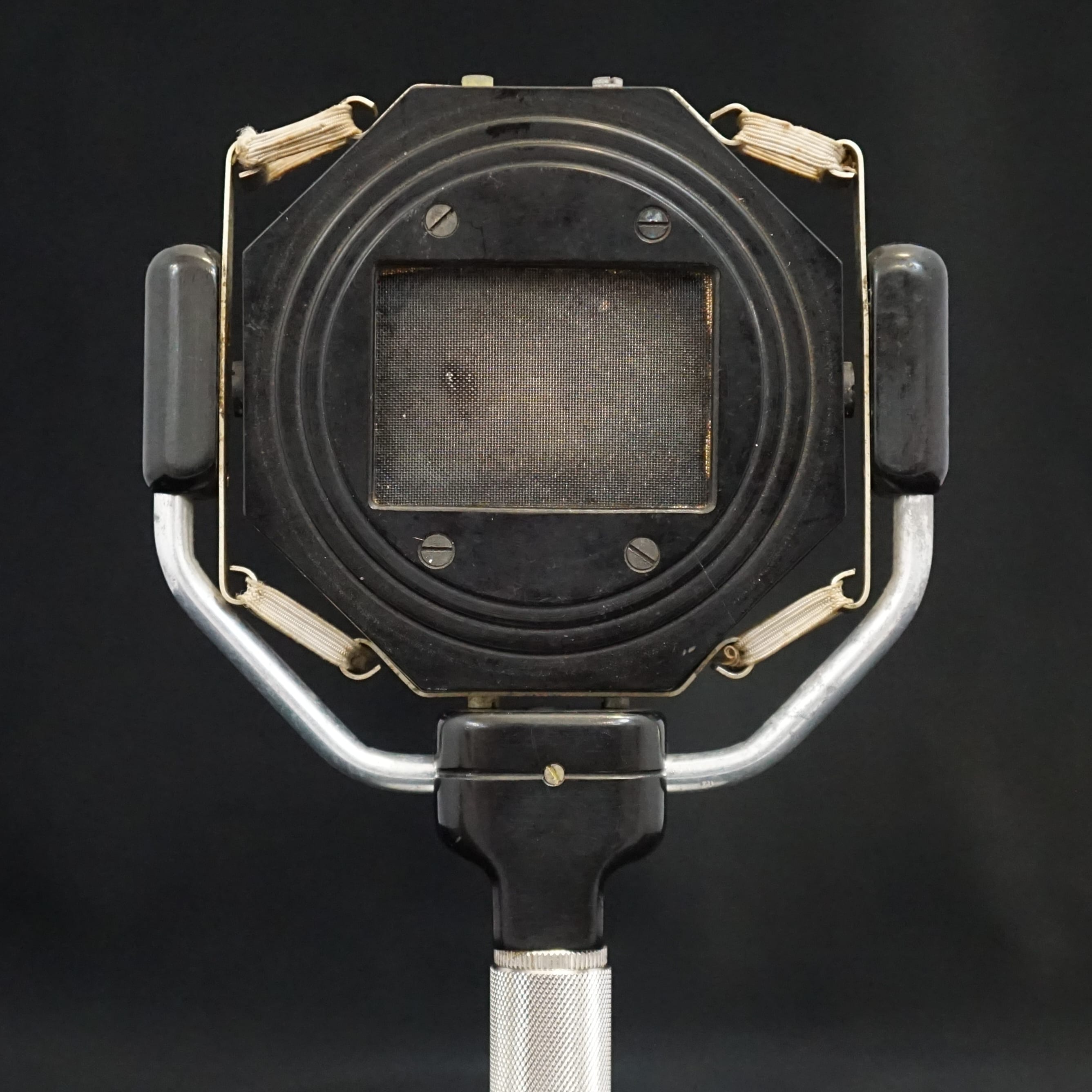
Marconi Reisz Microphone
Manufacturer:
MarconiModel:
Reisz MicrophoneCountry of Manufacture:
United KingdomMicrophone Type:
CarbonPolar Pattern:
OmnidirectionalProduction Start Year:
1926Rarity:
4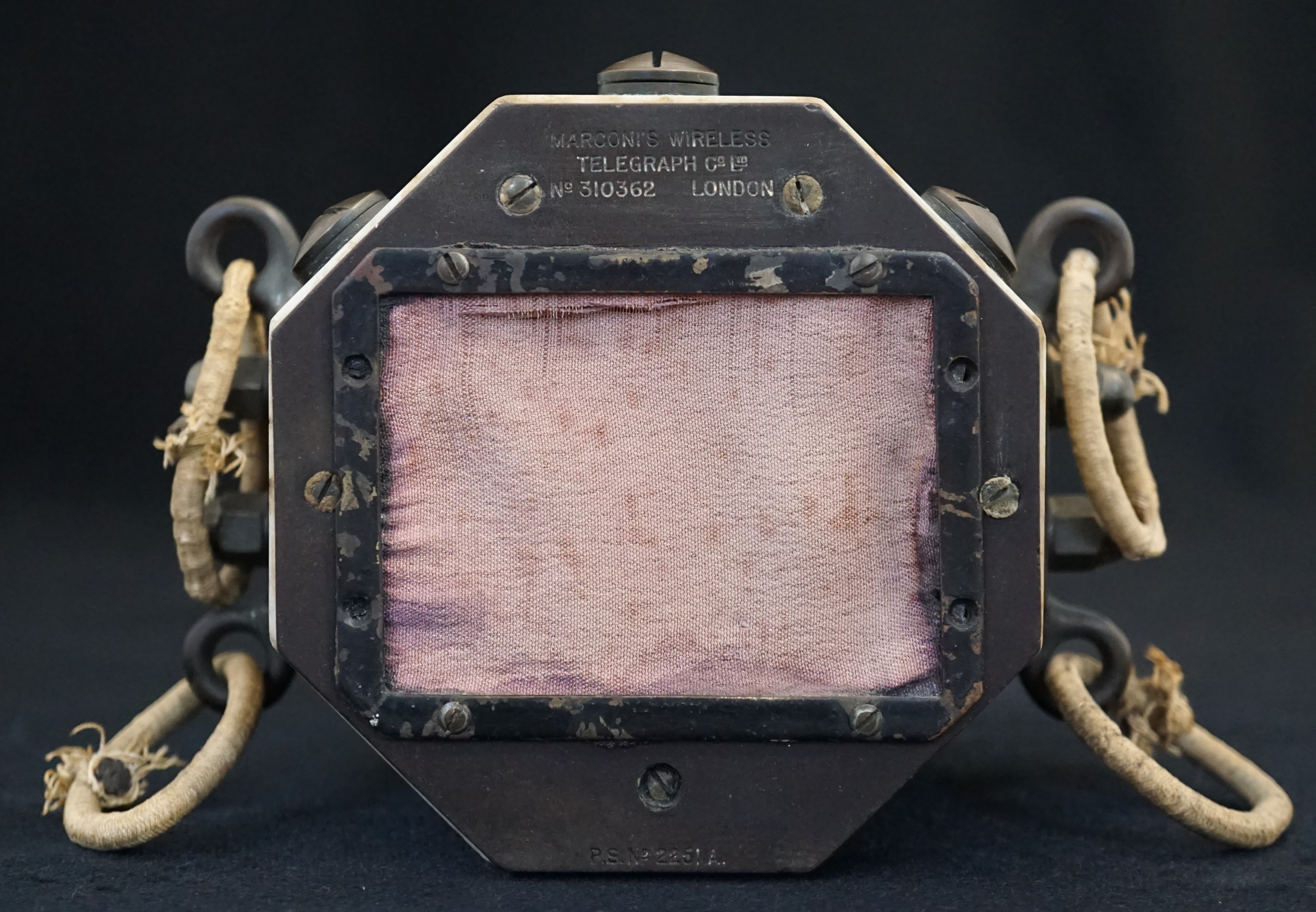
Audio Recording:
Speech (male) recorded with the Marconi-Reisz carbon microphone. The microphone has been serviced and re-packed with the original filling.
Multiple quality options available
Microphone History:
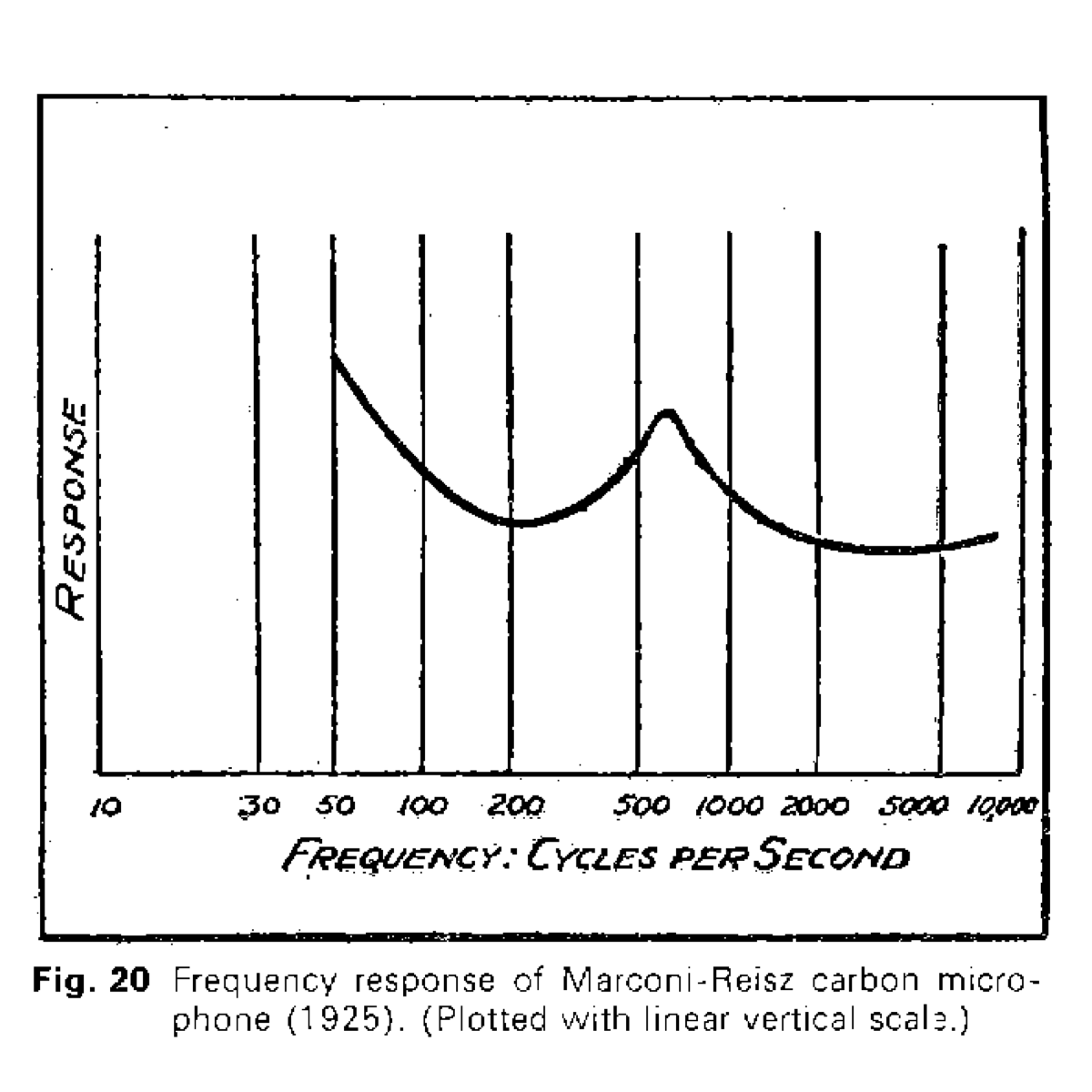
The frequency sweep above is taken from BBC Engineering, No. 92, October 1972, Page 18.
According to the British Science Museum, this was the BBC's standard microphone between 1926 and 1933. The microphone is constructed from a heavy, non-conductive marble body, with a shallow recess filled with carbon granules between two electrodes placed along its shorter sides. As sound enter the microphone, the sound waves compress the carbon granules, altering the resistance and modulating the current that flows through the microphone.
Some examples show no maker or instrument number on the front panel. For example the one shown on Martin Mitchell's microphone blog has no engravings. Presumably these are the earliest examples.
Our exhibit has "Marconi Wireless Telegraph Co. Ltd. London" engraved on the upper front plate, along with 'Instrument no. 310362". Below the grill it is marked "P.S. No. 2251A." This presumably refers to the power supply needed to operate the microphone. Instrument numbers that start with 310xxx generally do not have the patent numbers
Later models with instrument number starting 373xxx have two patent numbers written below the grill. These refer to GB patents 250430 and 258542.
There are so few of these left in circulation that it is worthwhile making a list of which serial numbers have been seen recently.
41819 appears in a youtube video by Swanny Swenumsen.
310125 was sold on Reverb.com, in Italy, in 2023
310153 is at the History of Science Museum at the University of Oxford.
310268 is in the Science Museum collection
310362 is in the Museum of Microphones collection.
310586 was sold at auction in Köln, Germany, in 2024.
310634 was seen for sale in 2026, in Italy.
373780 is in the Science Museum collection
373842 is in the Science Museum collection
373844 was seen for sale in 2026, in Italy.
Famous users
Irish playwright. and critic George Bernard Shaw is pictured below using a Marconi Reisz microphone, in the 1962 monograph "BBC Sound Broadcasting: Its Engineering Development" The photo is of course from much earlier.
And you can listen to him speaking in this video:
The first ever world-wide radio broadcast was made by Pope Pius XI, on Feb. 12, 1931 via Vatican Radio, using a Marconi-Reisz microphone and short wave radio transmitter supplied by Guglielmo Marconi, who as also in attendance. Some of the recording is available in this youtube clip.
King George V of England and Queen Mary each had ornate, customised Royal versions of the Marconi-Reisz made for them in or around 1925. You can see a high resolution photograph of the King's microphones at the Abbey Road website.
Technical Description:
From The Handbook of Technical Instruction for Wireless Telegraphists, (H. M. DOWSETT), 1939. p. 507.
Approximate D.C. resistance, 200-300 ohms.
Applied voltage, 6 volts; Polarising current, 20-30 mA.
From the Science Museum: "Sensitivity was good and noise performance acceptable, but there was a pronounced resonance at 5kHz, subsequently cured by substitution of a rice-paper diaphragm. There was a marked non-linear distortion (blasting) at high sound levels which necessitated careful placing of the microphone relative to the artists. Despite some shortcomings, this microphone gave good overall performance and was much smaller and more portable than the Marconi-Sykes Magnetophones introduced in 1923. By 1927 the Marconi Reisz was in virtually universal use, continuing well into the 1930s. This carbon microphone needed to be turned over daily to prevent the granules inside from settling. Although not nearly so sensitive as the earlier Round-Sykes microphone, it was far more widely used by the BBC because it did not require the same very high level of amplification"
From BBC ENGINEERING 1922-1972 by Edward Pawley
"Towards the end of the life of the British Broadcasting Company the Marconi-Reisz microphone appeared. This originated in Germany but was manufactured in the United Kingdom. It was of the carbon-granule type and consisted of an octagonal block of marble with a cavity in one side in which the granules were placed. The diaphragms were at first made of thin rubber, but later of mica. A peak in response between 4 and 6 kHz caused violins to scream. Finally diaphragms made of rice paper were used ; these resulted in a considerable improvement and the Reisz microphone continued to be used at all stations for many years until it was displaced by the ribbon microphones of the 1930s. The output of the Reisz microphone was high, so that hum and other forms of interference were reduced. There was, however, a tendency for the microphone granules to pack together and the microphone could easily be overloaded. The packing was particularly likely to occur if the microphone had been used on a stand and moved about. It produced an increase in hiss and a decrease in sensitivity. It could be cured by taking the microphone out of circuit, tipping it upside-down and beating it gently with the fist until the feed current observed on a milliammeter was restored to the correct value. The electrodes were of carbon about 1/4 inch in diameter and 1-1/2 inch long connected directly to the terminals at the back. Because of the high level of hiss, it was not advisable to use the Reisz microphone at a great distance from the performers, but this had to be done if the artists’ voices contained strong components near the peak frequency of the microphone. On this account, the baritone Raymond Newell had to be placed about 14 ft from the microphone. Normally the artists were fairly close to the microphone and spoke at an angle to it to reduce the effect of the rising frequency characteristic. This microphone was used with success for OBs (outside broadcasts), but music in the studio tended to sound very hard - which was possibly the reason why studio carpets were used for so long. One of the advantages of this microphone was that it could be suspended from the ceiling at a height at which it could ‘see’ the performers at the back of the studio."
Above: Testing various microphones at the BBC by playing a gramophone into them. The microphones include an AXBT, STC 4017, STC 'Bomb' and the Marconi-Reisz.
Frequency Response: