BBC PGS
Manufacturer:
BBCModel:
PGSCountry of Manufacture:
United KingdomMicrophone Type:
RibbonPolar Pattern:
Figure 8Production Start Year:
1953Rarity:
4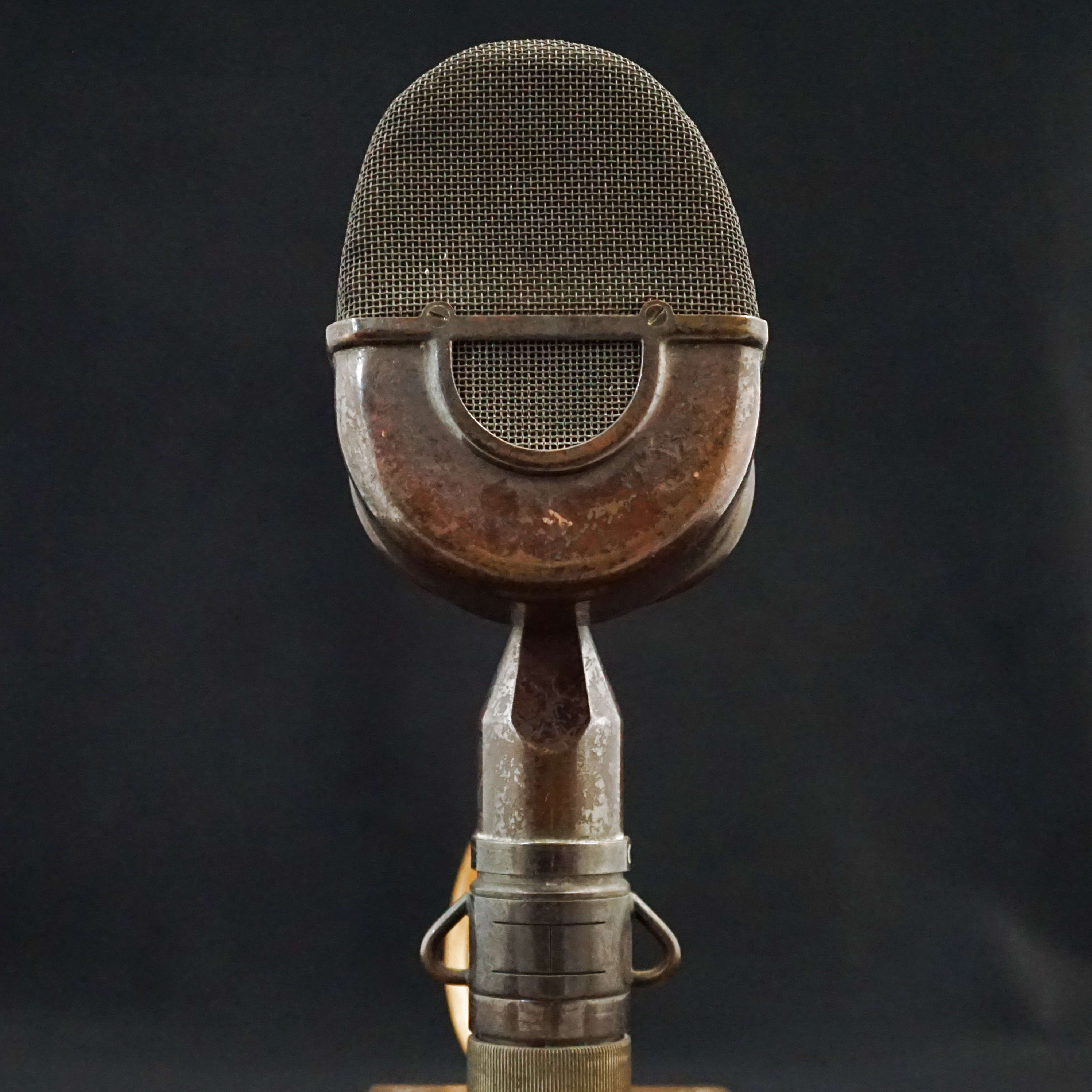
Audio Recording:
Nylon string guitar recorded with the BBC PGS ribbon microphone.
Multiple quality options available
Microphone History:
The Development of the BBC PGS Ribbon Microphone
The following is summarised from three BBC reports on the PGS microphone.
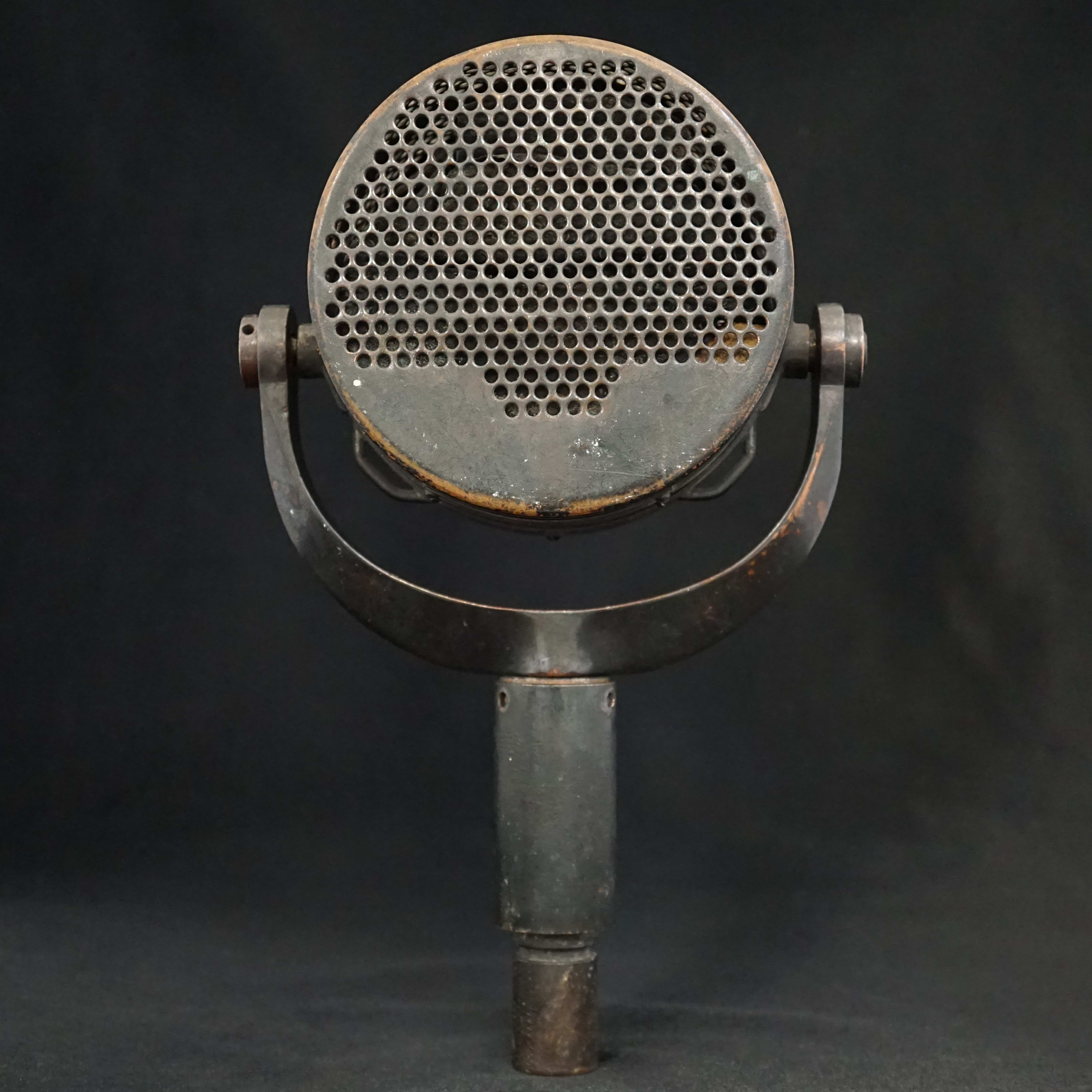
The BBC PGS ribbon microphone was developed by the BBC Research Department from 1951 as a smaller alternative to the BBC–Marconi AXBT microphone. Although the AXBT offered high sensitivity and good performance, its size presented limitations, particularly for television broadcasting. The PGS was designed to reduce the microphone's overall dimensions while maintaining useful sensitivity and frequency response, extending its high-frequency response, reducing variations in response with the angle of incoming sound, and facilitating ribbon removal and maintenance. PGS stands for "Pressure Gradient Single", with single indicating that the design had just one magnet. The earlier PGD model had two magnets.
The PGS employed a short, corrugated aluminium ribbon approximately one inch long and 0.23 inches wide. Its design incorporated a single-ended Ticonal permanent magnet with mild-steel pole pieces, closely spaced Monel gauze screens for acoustic damping, and a fabric baffle to compensate for reduced low-frequency response. Perforated baffles were positioned in front of and behind the ribbon to improve high-frequency performance. A removable perforated wire gauze protected the ribbon against dust and draughts.
The microphone's case incorporated a mounting yoke and housed the output transformer, and a balanced screen cable made connection to the outside world.
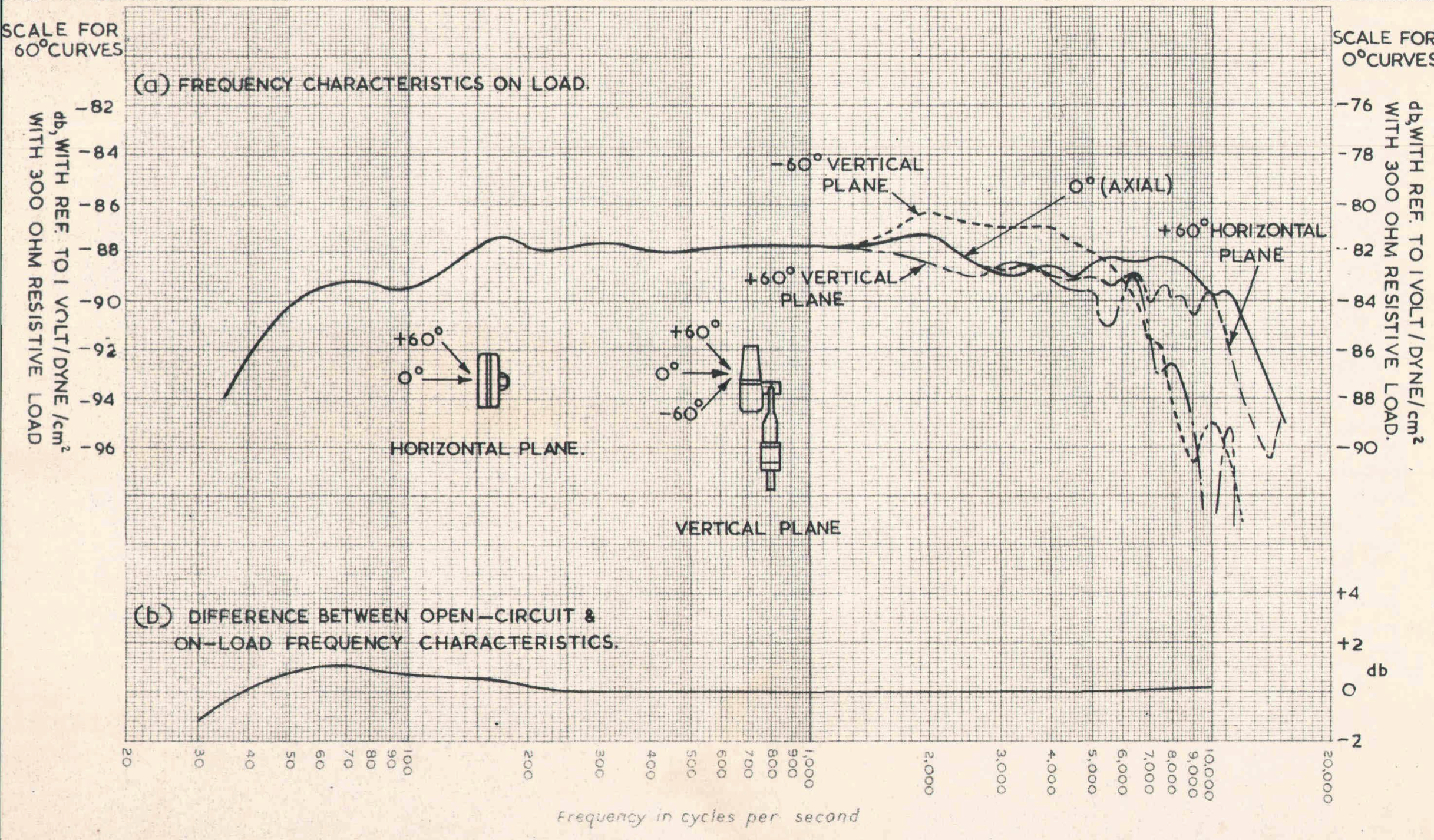
Following prototype trials in 1952, the PGS design was selected for production. Subsequent development focused on improving consistency and mechanical stability. Investigations showed that the ribbon's fine corrugations could flatten under vibration and mechanical shock, potentially causing the ribbon to sag and affecting its frequency response. The production ribbon profile was therefore modified to incorporate 20 corrugations per inch, which were pulled nearly flat during fitting. According to the BBC's 1956 final report, this arrangement prevented ribbon sagging and limited production variation in high-frequency response to approximately ±0.5 dB. (MoMics note - they sound better with deep corrugations.)
Measurements of the first 50 production microphones established a typical open-circuit sensitivity of −75 dB relative to 1 volt per dyne per square centimetre. At 1,000 cycles per second, impedance measurements ranged from 230 to 320 ohms, with a mean of 270 ohms. The report attributed much of the impedance variation to differences in the thickness of the hand-beaten aluminium ribbon material.
The 1953 interim report and 1956 final report document the progression of the PGS from a response to the need for a more compact broadcasting microphone to a production design whose construction and performance had been investigated and measured systematically.
The example shown in our collection had previously been taken out of commission and presented as a retirement gift to Douggie Chalmers who worked at BBC Radio Bristol between 1970 and 1980.
Thanks to Dr. Mark Taylor for the loan of his microphone.
Technical Description:
MoMics Note.
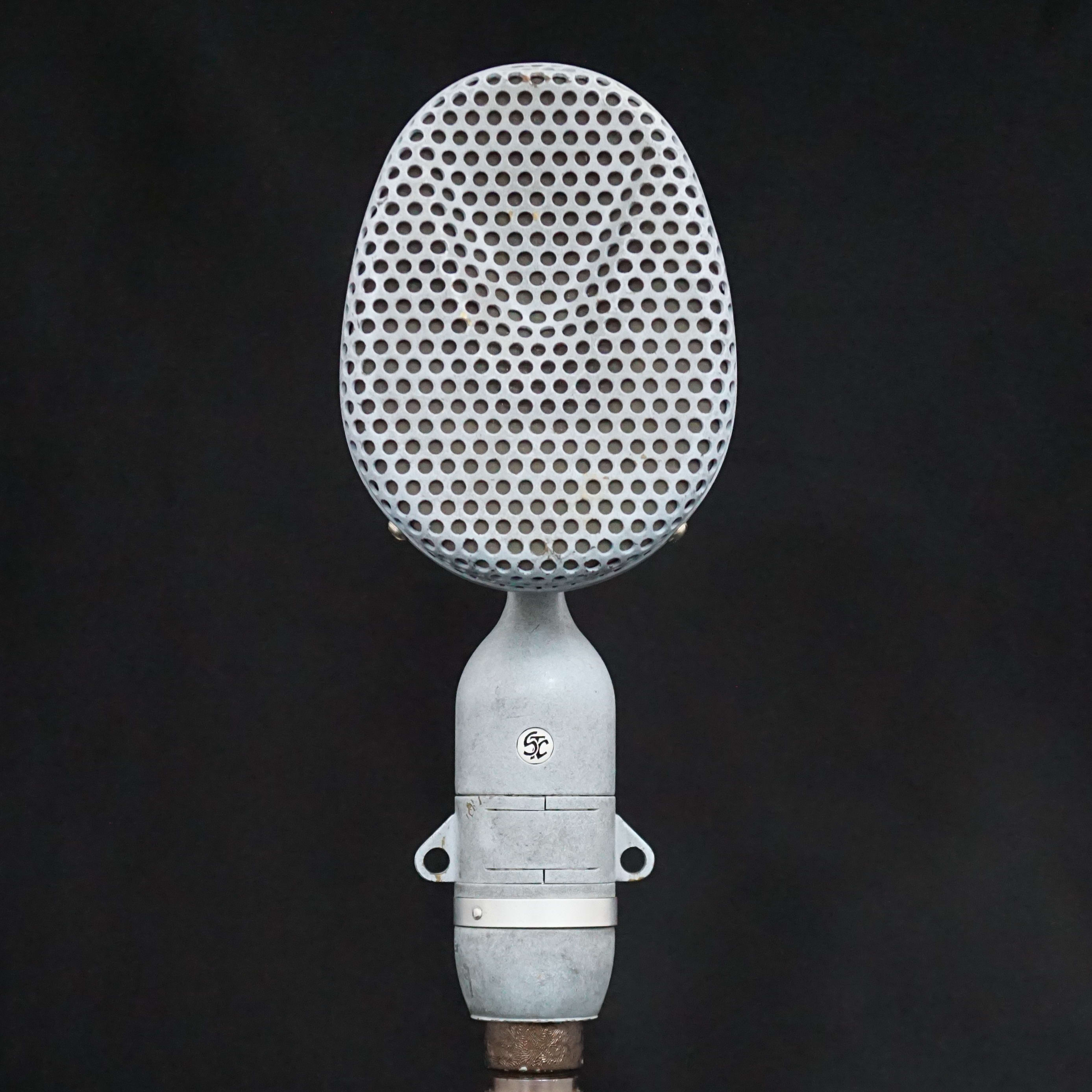
Unlike the 4038, which was fitted with a toroidal transformer, the PGS used a stacked transformer with laminations of size EI24/25, similar to those found in Reslo, Tannoy and Film Industries microphones of the same era. The transfomer is housed in a ferrous metal can to give extra shielding. Assembly of the PGS is tricky because of the wiring layout. The signal wires from the ribbon motor to the primary winding of the transformer are hidden inside the arms of the yoke and must be threaded around 90 degree angles, which requires skill and practice. Another quirk is that the three pin connector at the base of the microphone is not wired to the output but is present only to mount the microphone. The output is via the cable at the rear, which is also a challenge to fit and wire to the output transformer. Having worked on a few of these, it is easy to see why STC made changes to make production easier and faster for the 4038, which became the 'factory' version of the BBC's PGS design.
Frequency Response:
Impulse Response File:
Impulse Response file of the BBC PGS ribbon microphone.
BBC_PGS_IR.wav